
Practical guide
Professional profile
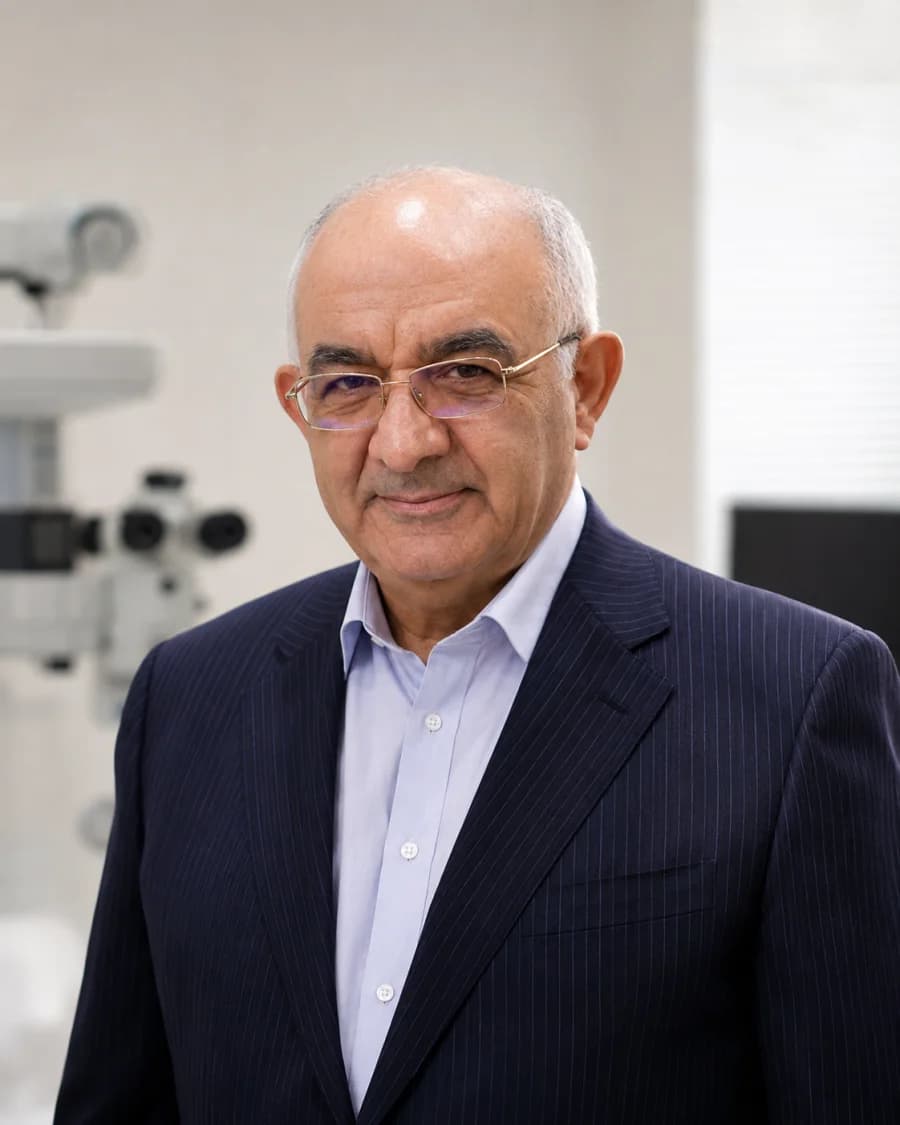
Professor Mahmoud Jabbarvand Behrouz is an Iranian ophthalmologist. The professional and research sources listed on this page associate his work with corneal surgery, anterior-segment ophthalmology, refractive surgery, and ophthalmic research.
Academic background
Published reference material identifies him as a Professor in the Ophthalmology Department at Tehran University of Medical Sciences, associated with Farabi Eye Hospital. Research publications also list affiliations with the university's Eye Research Center and ophthalmology units.
Farabi Eye Hospital leadership
Farabi Eye Hospital's published historical information lists Professor Jabbarvand as hospital chief from 2006 to 2016. That period is part of his professional background; it is not a statement about a current role or practice location.
Cornea and anterior-segment ophthalmology
Professional profiles and publications associate his work with corneal conditions and surgery as well as the anterior segment of the eye. Assessment in this area depends on individual information such as corneal shape and health, visual function, previous procedures, and other examination findings.
Keratoconus and femtosecond-laser research
Indexed literature includes a study of continuous intracorneal ring implantation for keratoconus using a femtosecond laser. Such research describes specific clinical methods; it does not establish whether a method is appropriate for any individual patient.
Refractive surgery and publications
His research profile includes work related to refractive surgery, keratoconus, cataract surgery, and corneal techniques. The external references on this page allow readers to review the underlying professional and research information directly.
Keratopigmentation and visible eye-colour change
Public profiles associate Professor Jabbarvand with keratopigmentation and visible eye-colour-change enquiries. This is an ophthalmic topic with individual risks and alternatives. Eye anatomy, technique, possible effect, and patient suitability must be assessed by a licensed ophthalmologist after an examination; promotional imagery is not a basis for a decision.
Questions for an ophthalmologist
- the consultation goal and available examination records;
- previous eye procedures, current medicines, and relevant conditions;
- risks, alternatives, and follow-up requirements;
- travel requirements and care arrangements after a visit.
Important
This is a professional information profile, not medical advice. Treatur does not confirm physician availability, practice location, a treatment plan, cost, or clinical outcomes. Those details require individual confirmation from a licensed provider.